
Are We All On Ref cam?
We’re in desperate times as the world changes at unprecedented speeds. How do creative industry people conduct themselves when panicked?
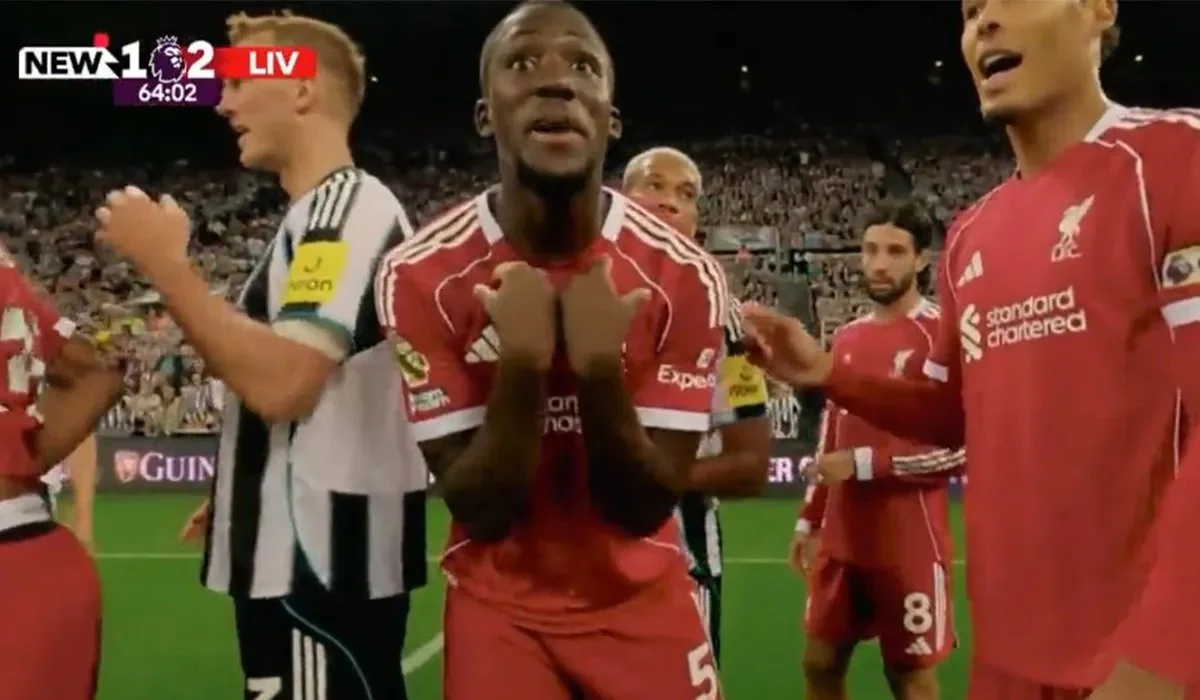
It felt more dystopian and psychologically intrusive than most of the shite I’ve tried under the ‘horror’ category on Netflix. The way my screen jostled and swung from side to side, raking our faces with upsetting snatches of Premier League football superstars gesticulating, all sweaty and outraged, uncomfortably close to us, hands cupped together like Oliver Twist begging for sustenance. It didn’t linger on any of them long enough for our brains to comprehend what we were seeing, expertly yet unintentionally employing the genius of The Blair Witch Project’s ‘what was that?’ handheld camera filmmaking technique.
Welcome to ‘ref cam’ – a squirming, sodden, utterly evil demon child birthed into the already sick world of top-flight football.
The only consolation, as I watched Newcastle United and Liverpool on Sky Sports Monday Night Football, was the hilarious mask of revulsion on my 70-year-old dad’s face. We were still trying to get over the poor referee’s new performative responsibility of shouting out the VAR decision through a microphone to the live audience.
We weren’t prepared for this. I can’t stop thinking about it.
To make matters worse, I’m reading Matt Dickinson’s gorgeous 99: Manchester United, the Treble, and All That. I’ve learned so much about coaching, team spirit, work ethic, roots, and sheer desire to master a craft from the story of one of sport’s all-time greatest teams and its rightly revered manager. Don’t get me wrong, even back in 1998-99, the money was out of control, but the turn of the century now feels like the last time fans and players were tethered in any way, before the sport became big business.
Why am I telling you all this? Well, as ever, I joined some dots.
My beloved creative industry, while far from awash with dirty money and entitlement, is becoming increasingly performative as work pools shrink. They’re shrinking because of a perfect storm of technological advances, greed, world events, shaky economies, risk aversion, and increasingly ready acceptance of affordable mediocrity.
Social media hijacked a large part of what used to be much more about faces, places, and connections than it was about shouting for attention. This isn’t entirely bad. How could it be? I landed my dream client, WWE, thanks to the accessibility of creative directors otherwise beyond my reach. I shouted for their attention and got it from the comfort of my spare room. But it happened because, despite the Atlantic Ocean between us, we built a relationship upon shared values and the love of great design and creativity.
What I really adored about my early trips to London, paying peanuts to sleep in an 8-bed dorm in a Brixton hostel, was walking into a 3D, real-life environment, never to look back. With every guest pass to a posh HQ, I was connected, face-to-face, in real life, and felt all-important belonging. And it wasn’t just the person I’d arranged to meet whom I met. They’d walk me around the studio or the design department, introducing me to other designers, editors, art directors, and whoever else might one day want to buy my artistic wares. It worked in the same way social media does, just with sore feet and a few beers at lunch time or after the work day tacked on. You know what they smell like. A beer or a coffee ensured the person would remember you, not lose you in their bookmark tab forever. They’d stick their neck out to push for a superior to commission you because you were real and they’d seen you were professional.
As I watched my dad’s face scrunch into itself and almost disappear, I sniggered, but I understood and shared his horror, infusing the guffaw with sick desperation. You have to remember, he grew up in an era of professional football when it wasn’t uncommon to see your heroes in the pub or the chippy after the match. I’m not saying this was better than the ultra-athlete/celebrity incarnation of today’s game, but it, like those days of just a generation ago in the creative industry, was built on a connection between fan and player, and the vast majority of it was live and in living colour, not on Twitter. Commonality, respect, admiration, togetherness.
Today, most of us in the creative industry forego that hard work. The half-day of work and overpriced train ticket fare sacrifice required to make a meeting happen could be saved during a cost-of-living crisis, and we can send out 100s of emails or create several posts, spinning thought leadership and portfolio posts like digital webs in the hope of catching new clients. Everyone is on there, at the tips of our fingers via keyboards and screens. So we all go there. Every fucking one of us. But it means we have to shout louder to be heard, following the flock in apeing techniques to up our volume. Even then, we’re scared of algorithms kidnapping our content. Before we know it, we’re on our knees, hands cupped over our chins, begging and pleading to be seen and heard, and in the heat of the moment, when things are tight and cash flow is dicked sideways, we’re no different from the footballers on the ref cam, because that bond, the one that characterised bygone days of football and the creative industry, while not obsolete, is on the red list. It’s endangered, and what we’re left with is a bleached creative coral reef, retaining the shape and the likeness of what we adore, only without colour or life.
The ref cam comparison might be fanciful, given the fact the footballers are loaded and we’re skint, but you see my point – there’s only one ref on that pitch, strapped up like the Terminator with lasers and microphones, time travel gadgets and cameras to force drama where it is least needed. The official carries great responsibility and power, the keys to the kingdom, and so gets swarmed like art directors asking for an illustrator recommendation online, despite only being able to appease one.
I'm not Sir Alex Ferguson, but I can coach around creativity, so get in touch if you could benefit from some guidance in these dystopian times, head to the coaching area of the site!